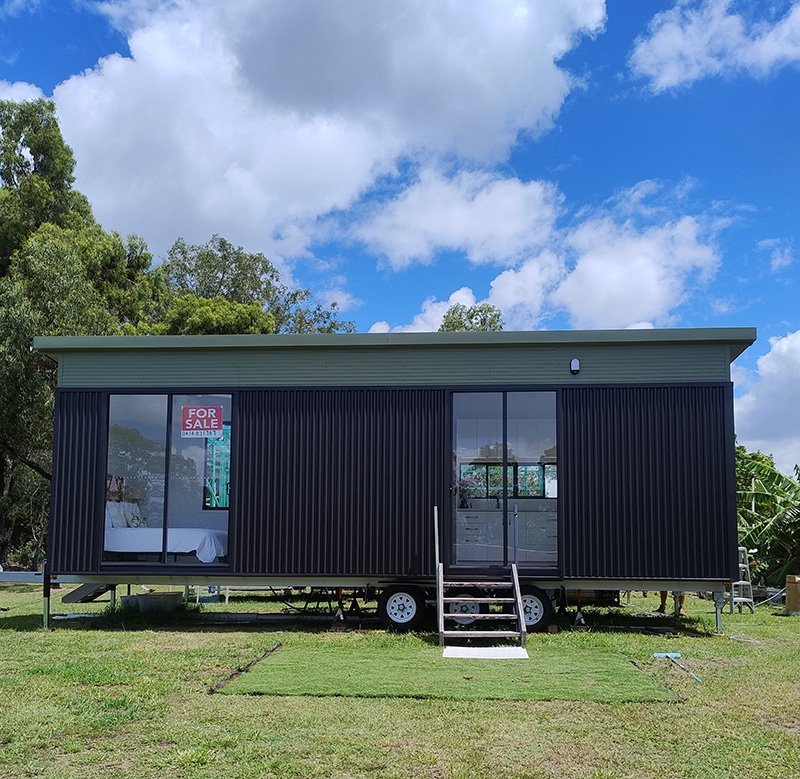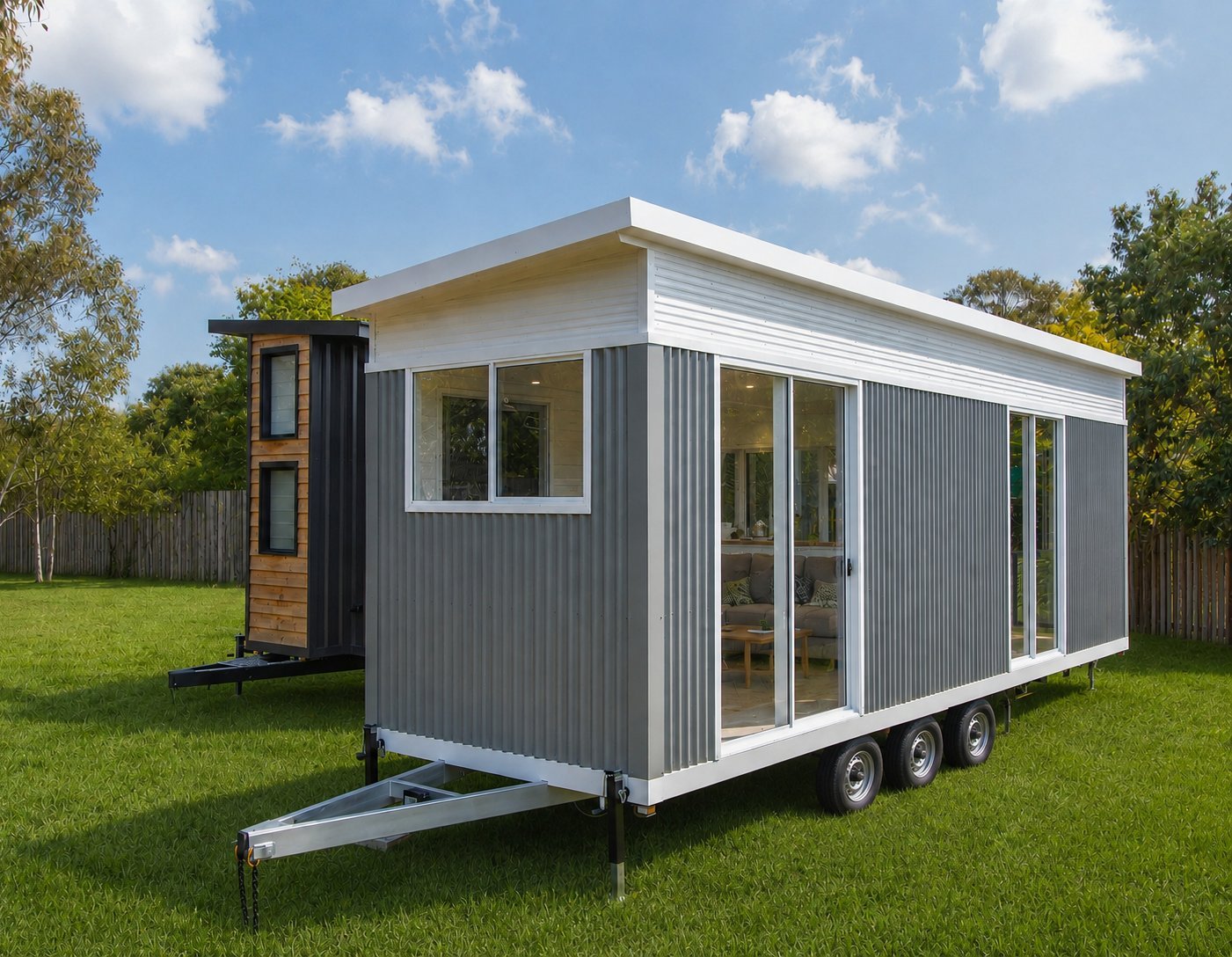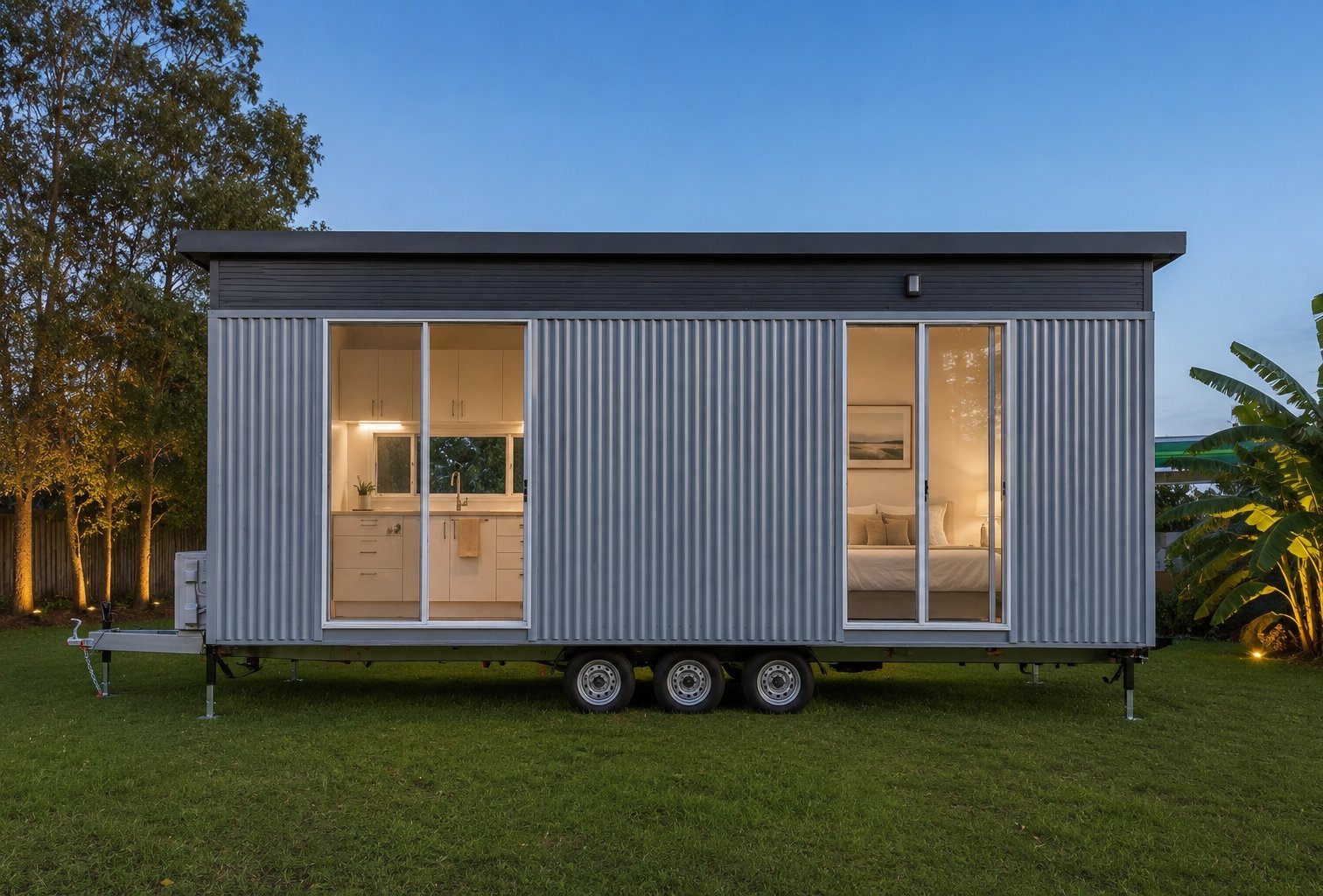
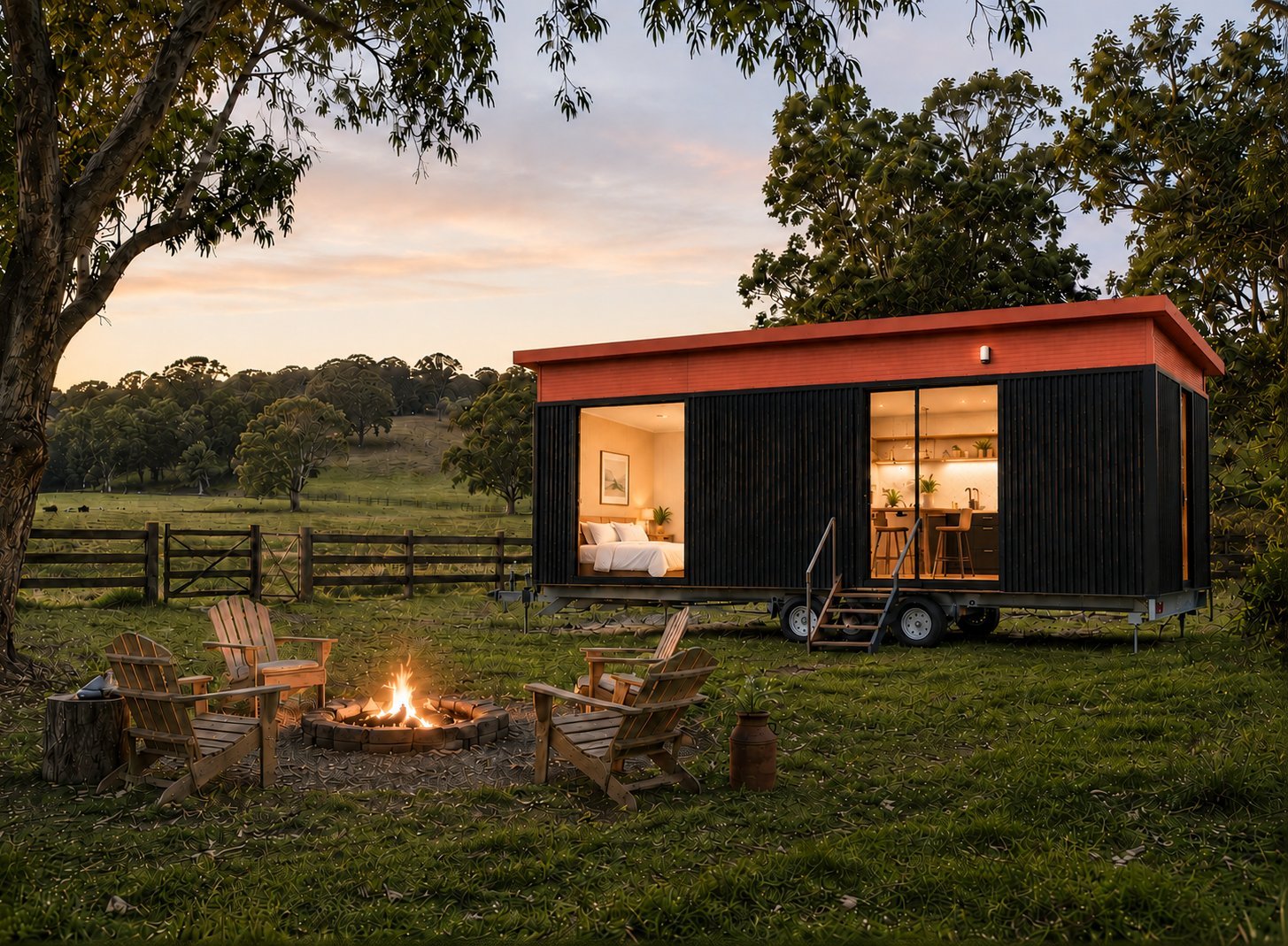
One of the quiet advantages of a tiny home is how naturally it fits a lighter, more sustainable lifestyle. Less space means less to heat, cool, power and maintain — and going off-grid becomes genuinely practical.
A smaller footprint by design
Building on wheels means no large concrete slab and far less site disturbance than a conventional home. You use fewer materials to build, and less energy to run day to day.
Power, water and waste, off the grid
- Power: solar panels and battery storage can run a well-designed tiny home, with a generator as backup for remote sites.
- Water: rainwater tanks and bore water are common on rural properties.
- Waste: a composting toilet reduces water use and suits sites without sewer or septic.
Comfortable and efficient
Good insulation, cross-ventilation and quality windows do a lot of the work, keeping the home comfortable while keeping running costs low.
General information only. Off-grid setups and waste systems may need to meet local requirements — check with your council.
Want a home that treads lightly? Talk to Big Coast Tiny Homes about an eco-friendly, off-grid-ready build.