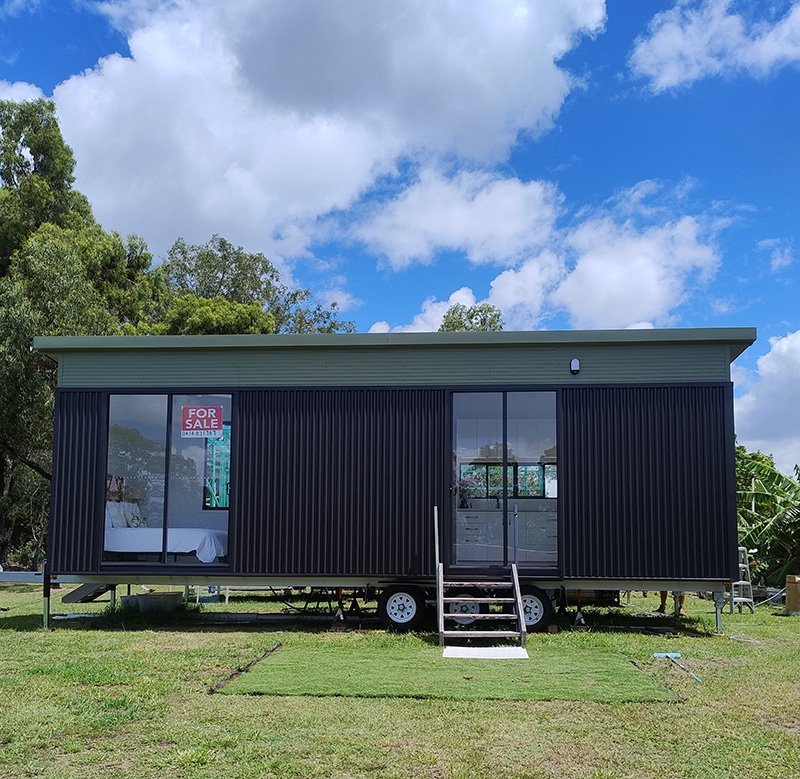
Tiny homes on wheels (often called THOWs) are one of the most flexible ways to add a home to your property in Australia. At Big Coast Tiny Homes, we build them right here on the Gold Coast — so before you buy, here's what's worth understanding.
What is a tiny home on wheels?
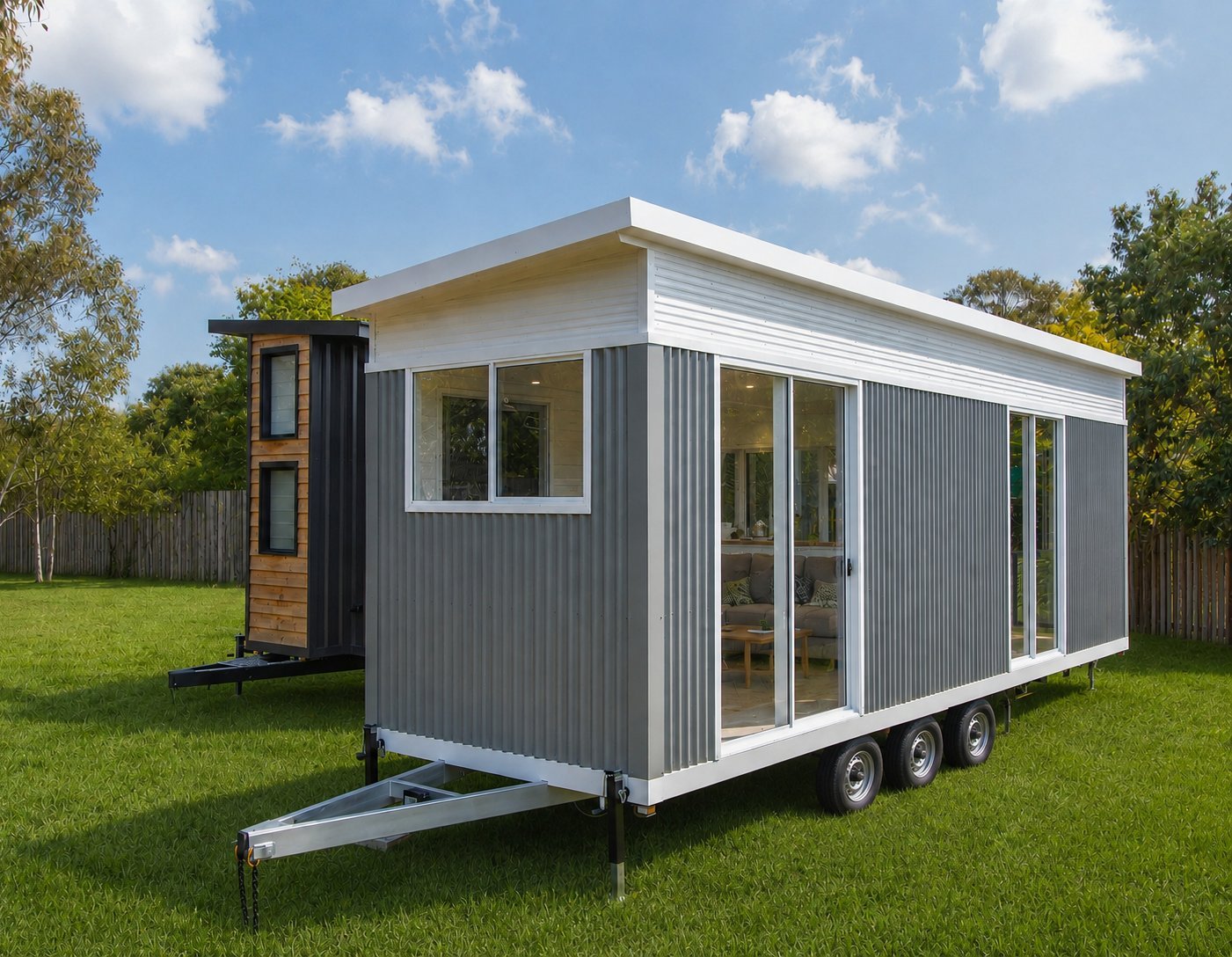
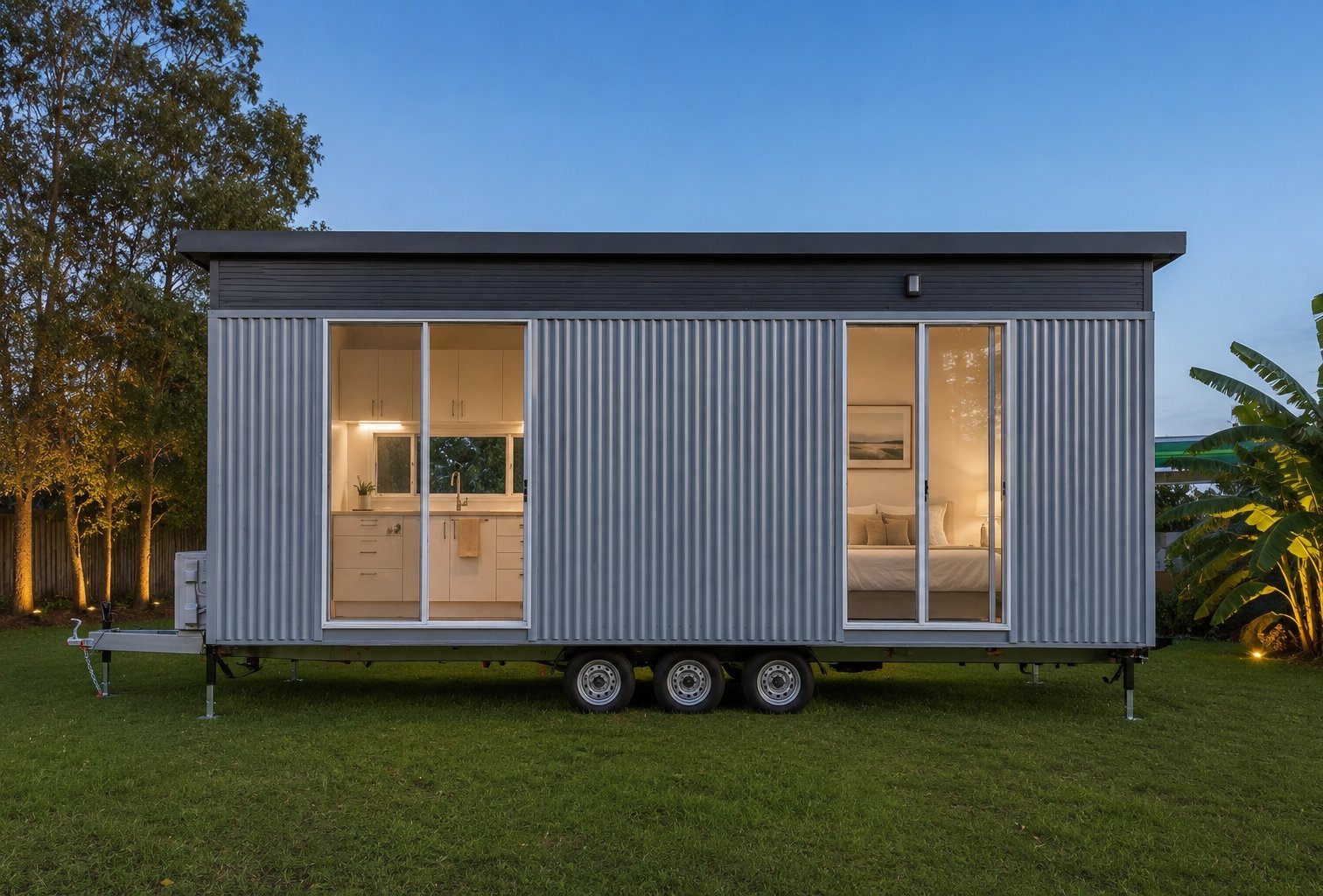
A tiny home on wheels is a compact, self-contained home built on a registered trailer chassis. It's designed to be transportable and is generally treated as a moveable dwelling, similar in principle to a caravan — rather than a permanent building fixed to the land.
In most cases a tiny home on wheels is:
- Built on a registered trailer with a VIN
- Designed to be towed and relocated
- Fully or semi self-contained
- Used for flexible, temporary or secondary living
Built on a registered trailer with a VIN
Every Big Coast home is built on an engineered trailer that carries a Vehicle Identification Number (VIN). That's what makes the home towable and relocatable, and it's a big part of why homes on wheels are so flexible: if your circumstances change, the home can move with you.
How big can a tiny home on wheels be?
To be registered and transported as a standard caravan in Australia, a tiny home on wheels generally needs to stay within these limits:
- Width: up to 2.5 m
- Length: up to 12.5 m overall
- Height: roughly 4.1–4.3 m from the ground (depending on the vehicle and route)
Homes larger than this may not qualify for standard caravan registration and are usually treated as oversize loads, which can bring extra transport permits and approvals.
Do you need council approval?
There's no single national rule. Requirements depend on your state, your local council, whether the home is on wheels or fixed, how it will be used, and whether there's already a dwelling on the property.
In Queensland, a tiny home on wheels is generally treated as a caravan when it stays on its wheels, can be registered, is used for temporary accommodation, and isn't permanently fixed or connected to services. In those cases a planning approval is often not required under the state framework — although local council laws still apply. Always check with your local council before you buy or place a home.
Why choose a home on wheels?
People choose wheels for flexibility and mobility, generally lower site-preparation costs, more placement options, and the ability to keep the home as a moveable asset. It's ideal for guest or family accommodation, rural blocks, holiday use and short-term rentals.
This article is general information only and is not legal, planning or regulatory advice. Council requirements vary and change over time — always confirm with your local council.
Want to know if a tiny home on wheels would work on your block? Get in touch with Big Coast Tiny Homes — you'll talk directly with the builder.